
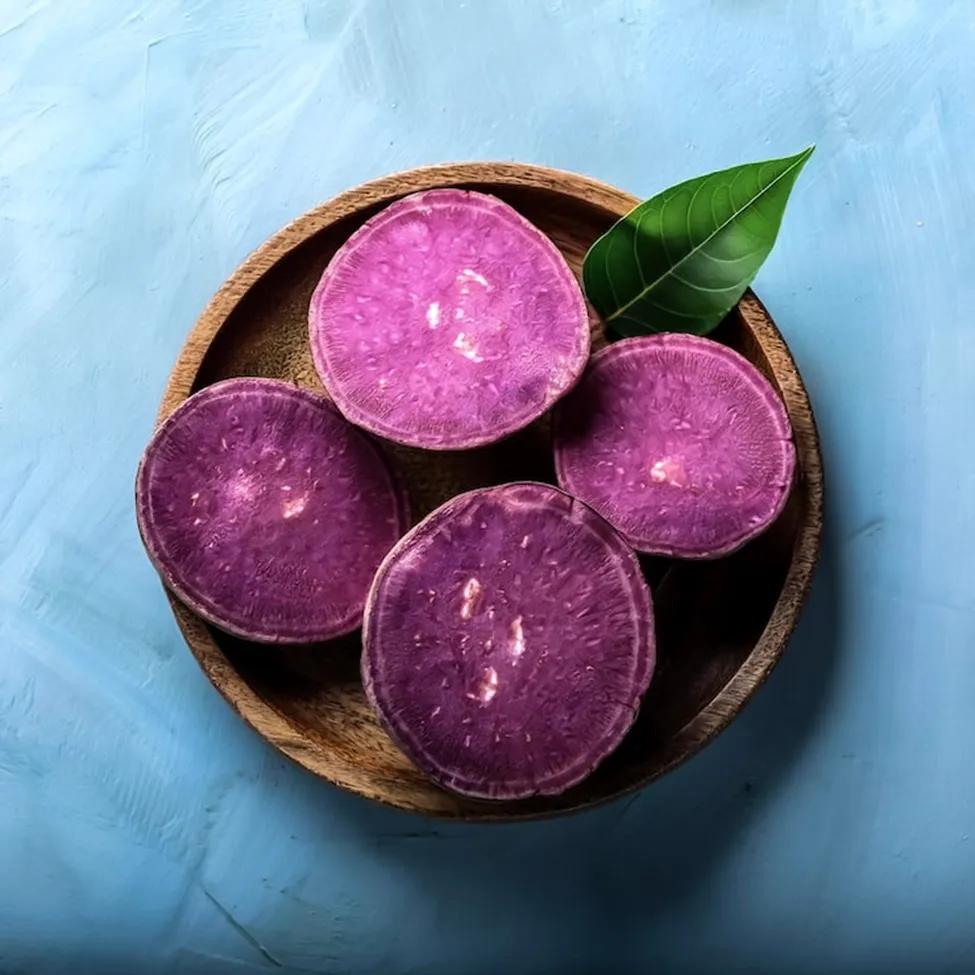
The first time you see a vibrant purple dessert, it is hard not to pause. That intense hue feels almost unreal, like a splash of twilight captured in food. Many people assume that ube and purple yam are identical simply because they share that signature colour. Yet the question keeps coming back: are they actually the same ingredient? If you are shopping for ube powder in Canada, experimenting with baking, or trying to recreate a Filipino dessert, knowing the distinction matters. Taste, texture, starch content, sweetness, and botanical origin all influence the final result.
Understanding those differences is like adjusting a recipe’s foundation small changes can shift the entire outcome. Let’s clarify what ube truly is, how it compares to purple yam, and why the confusion persists.
What exactly is ube?
Ube refers specifically to Dioscorea alata, a species of yam widely cultivated in Southeast Asia, especially in the Philippines. Its flesh ranges from lavender to deep violet, with a naturally sweet, slightly nutty flavour. Unlike many root vegetables, ube carries a subtle vanilla-like aroma when cooked. That aromatic quality explains its popularity in desserts such as ube halaya, cakes, ice cream, and pastries.
In Canadian markets, ube often appears in powdered form. Ube powder is made by cooking, dehydrating, and finely milling the yam. This process preserves colour and flavour while extending shelf life. For bakers and food enthusiasts, powder offers consistency and convenience, particularly when fresh ube is difficult to source. The texture of ube after cooking becomes smooth and creamy. Its starch structure allows it to blend seamlessly into batters and custards without becoming watery. This is essential when aiming for stable fillings or dense baked goods. While some people use the term “purple yam” as a blanket description, ube represents a specific botanical identity rather than a generic colour category.
Is purple yam just another name for ube?
The short answer: not always. “Purple yam” is a broader descriptive term that can refer to several varieties of yams with purple flesh. Ube is one of them, though not the only one. In different regions, other purple-fleshed yams may look similar but differ in flavour intensity, sweetness, and moisture content. In Canada, grocery labels sometimes blur this distinction. Imported products may use “purple yam” as a simplified marketing term even when the ingredient is technically ube. This contributes to ongoing confusion. When reviewing packaging or sourcing online, it helps to verify the botanical name or country of origin. For those comparing sourcing options, especially when looking for ube purple yam products, clarity about the variety ensures better culinary results.
Some purple yams outside Southeast Asia lean more earthy than sweet. Their texture may be drier or grainier once cooked. Substituting them in recipes designed for ube can alter both taste and consistency. The difference may not be dramatic in savoury dishes, though in desserts the nuance becomes noticeable.
Differences in taste, texture, and culinary performance
Although visually similar, ube and other purple yams diverge in key sensory characteristics.
- Sweetness
- Moisture content
- Starch density
- Aroma intensity
- Colour saturation
Ube tends to be naturally sweeter, making it suitable for desserts without requiring excessive added sugar. Its flavour profile includes soft nutty notes with a gentle floral hint. Other purple yams may present a more neutral or mildly earthy tone. Texture also matters. Ube’s creamy consistency contributes to smooth purées and stable emulsions. Some alternative purple yams become fibrous or slightly crumbly after cooking. In baking, that distinction influences crumb structure and moisture retention.
Colour is another factor. Ube often produces a vibrant, almost electric purple, particularly when processed into powder. Other purple yams may yield a muted tone once exposed to heat. If visual impact is important think cakes, lattes, or frostings this difference can shape the final presentation.
Why the confusion persists?
Global food trends travel quickly, though botanical terminology does not always follow with equal precision. As Filipino cuisine gained popularity worldwide, the word “ube” entered mainstream vocabulary. Retailers outside Southeast Asia sometimes opted for the more descriptive “purple yam” on packaging to appeal to consumers unfamiliar with the term. Marketing language simplifies. Botanical accuracy becomes secondary. Online recipes further compound the issue by using both names interchangeably without clarification. Social media visuals reinforce the colour association rather than the species identity.
From a culinary standpoint, many home cooks assume interchangeability because both ingredients produce purple desserts. That assumption works in casual contexts, though professionals recognize subtle shifts in flavour balance. For those exploring baking seriously, the difference resembles swapping maple syrup for brown sugar similar category, distinct character.
Nutritional similarities and distinctions
Both ube and other purple yams provide carbohydrates, fibre, vitamin C, and potassium. Their purple colour comes from anthocyanins, antioxidant compounds also found in blueberries and purple cabbage. These compounds contribute not only to colour but also to nutritional value. Caloric content remains similar across varieties. Differences emerge primarily in sugar concentration and starch structure rather than in overall macronutrient profile. Ube’s perceived sweetness reflects its natural sugar content combined with aromatic compounds that enhance flavour perception.
Processing into powder does not significantly alter core nutritional composition, though moisture removal increases concentration per gram. Consumers in Canada looking for pantry-stable options often prefer powder for practicality without sacrificing the distinctive qualities of the fresh root.
When should you choose ube powder specifically?
If the goal involves traditional Filipino desserts or visually vibrant baked goods, choosing authentic ube powder ensures consistency. Its predictable sweetness and creamy behaviour simplify recipe execution. In pastries, frostings, or custards, that reliability prevents texture imbalance. For savoury dishes where colour is secondary and sweetness less critical, other purple yams may suffice. The decision depends on flavour expectations. When a recipe highlights ube as a central ingredient rather than a colouring agent, substitution becomes more noticeable. Understanding the distinction empowers better cooking decisions. Instead of relying solely on colour, evaluating flavour depth, starch behaviour, and aroma leads to more satisfying results.
A closer look at what truly sets them apart
Ube belongs to a specific yam species with distinct sweetness and aroma. Purple yam is a broader term covering several varieties that may differ in flavour and texture. If precision matters in your kitchen, identifying the exact variety makes a difference. Next time you reach for that striking purple ingredient, consider what you want it to deliver colour alone, or the unmistakable character of true ube?
